
Bruckner Kitchen
The Process
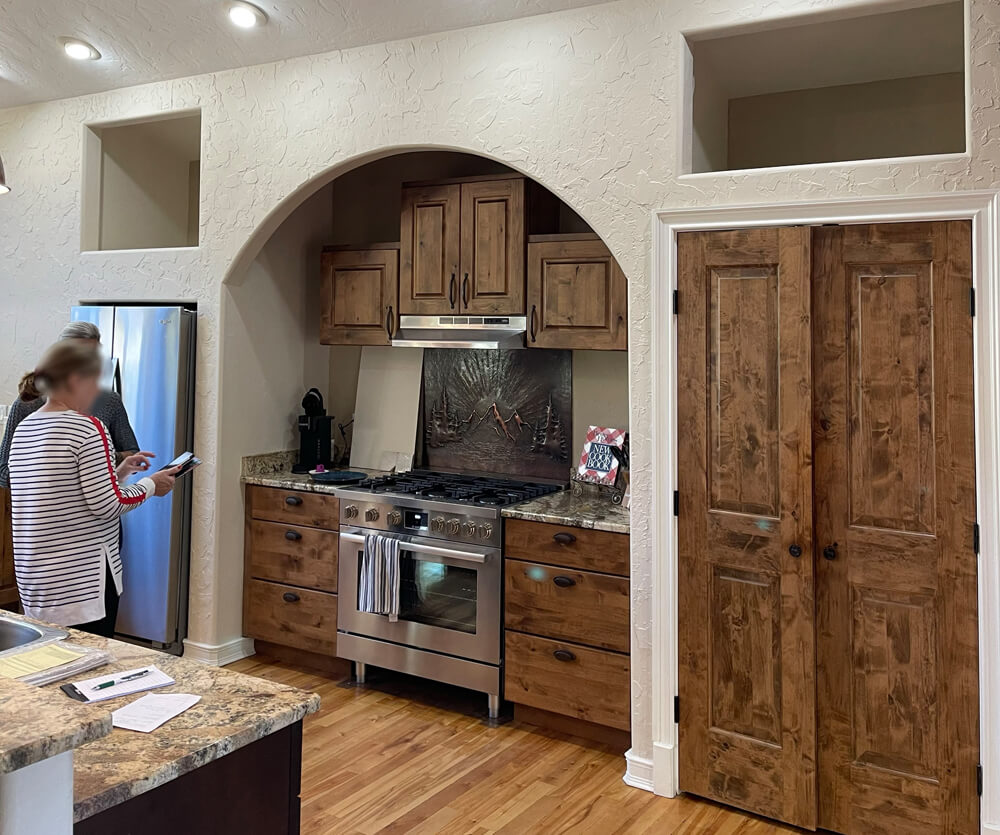
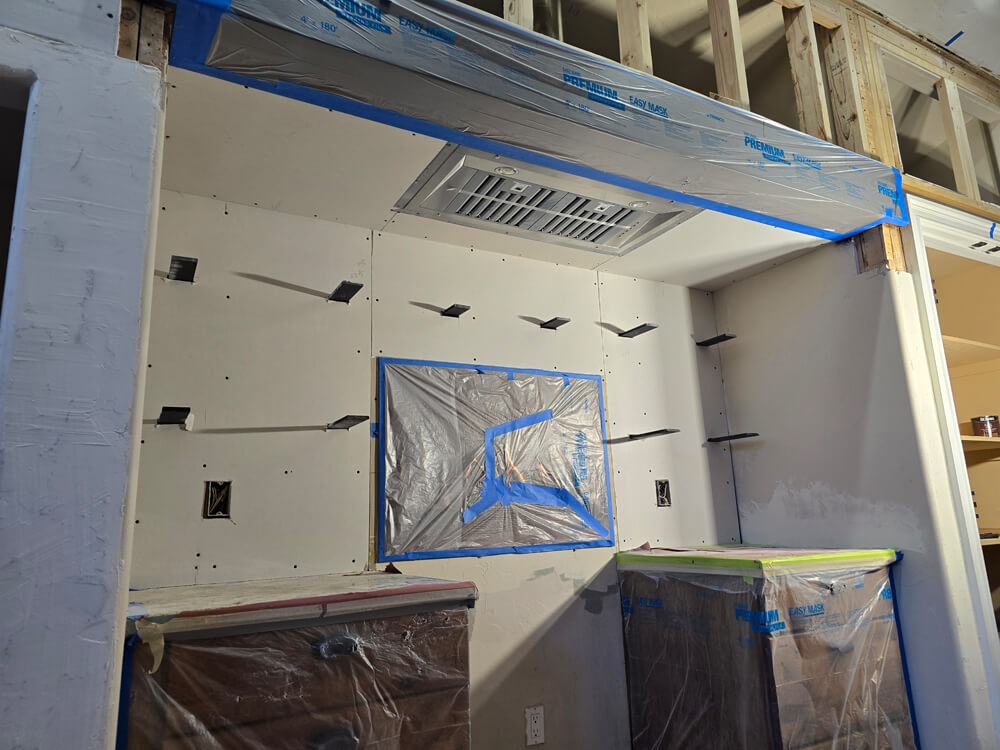
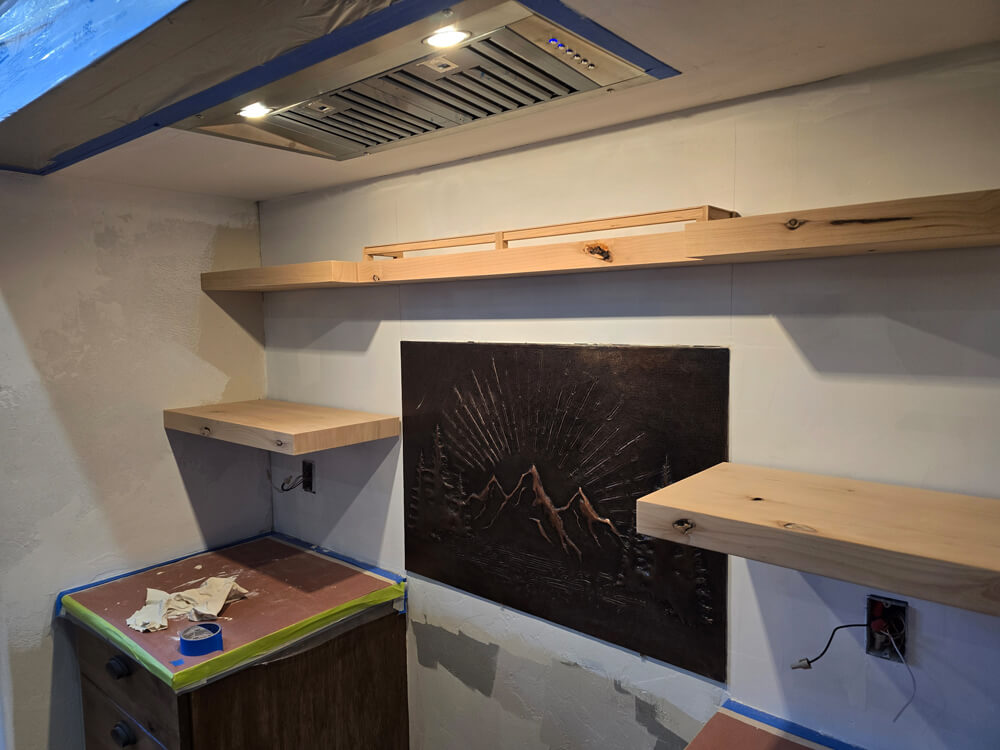
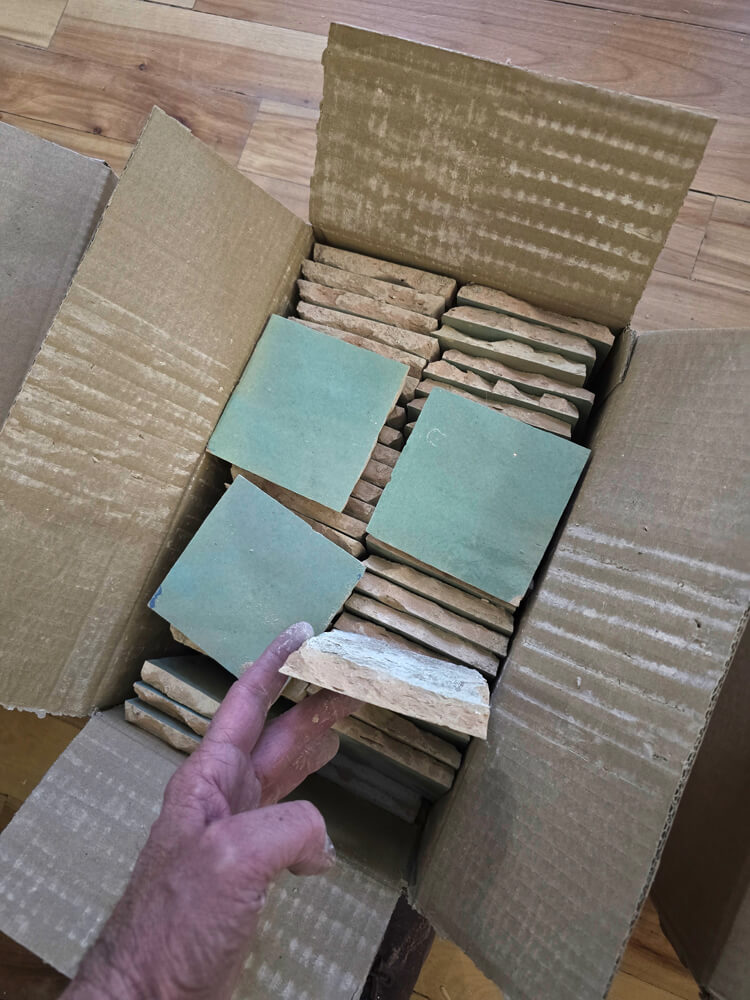
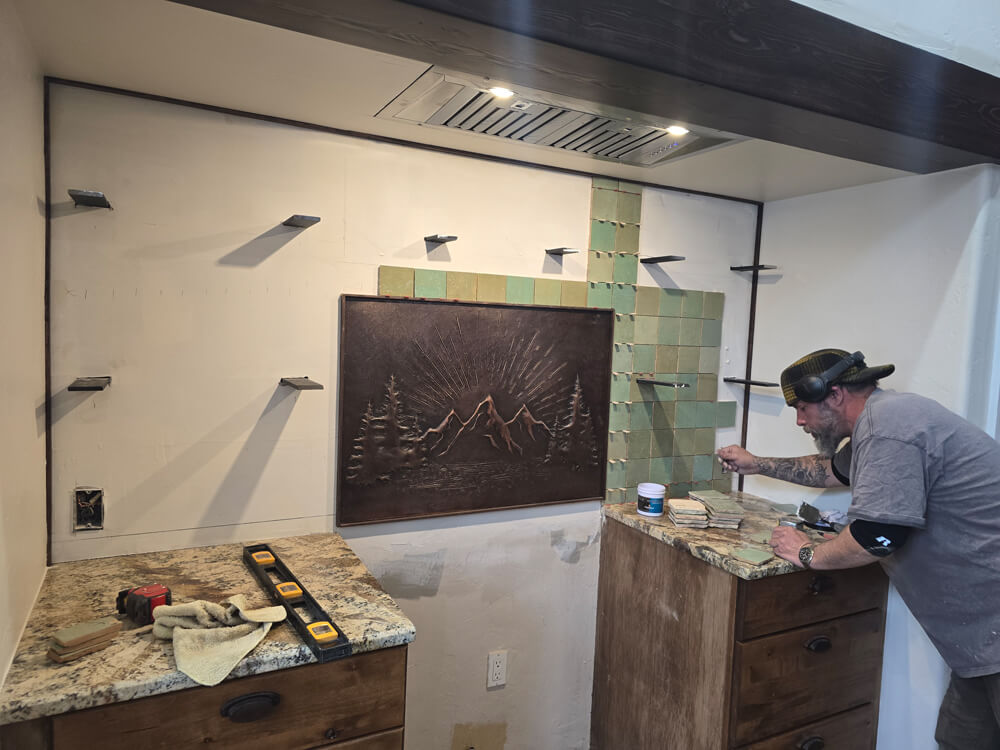
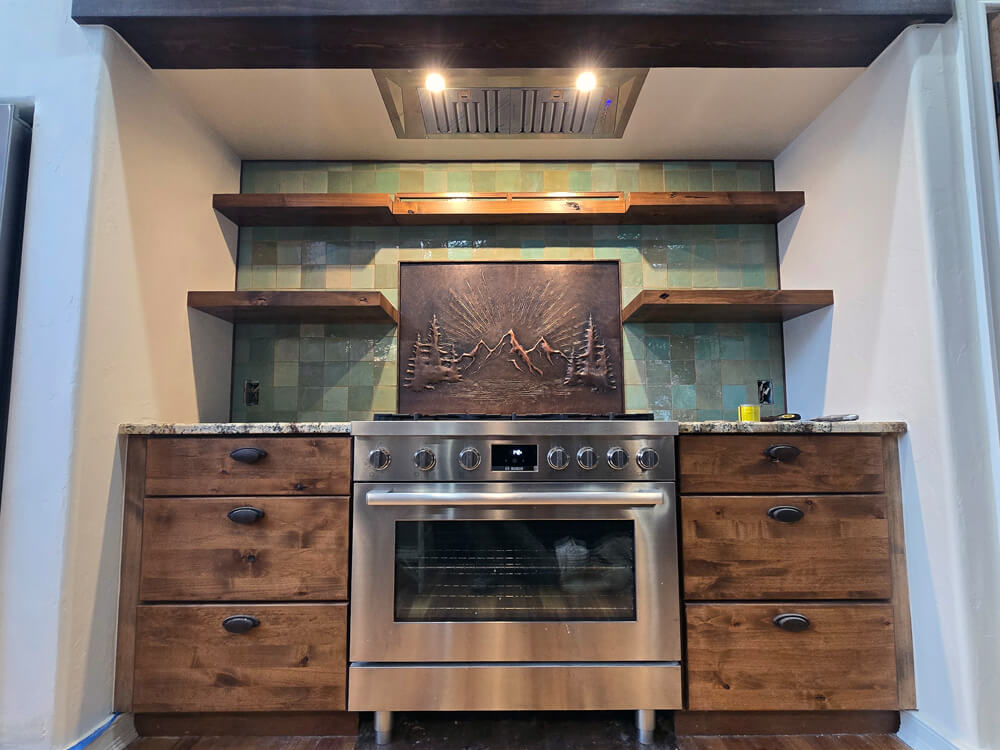
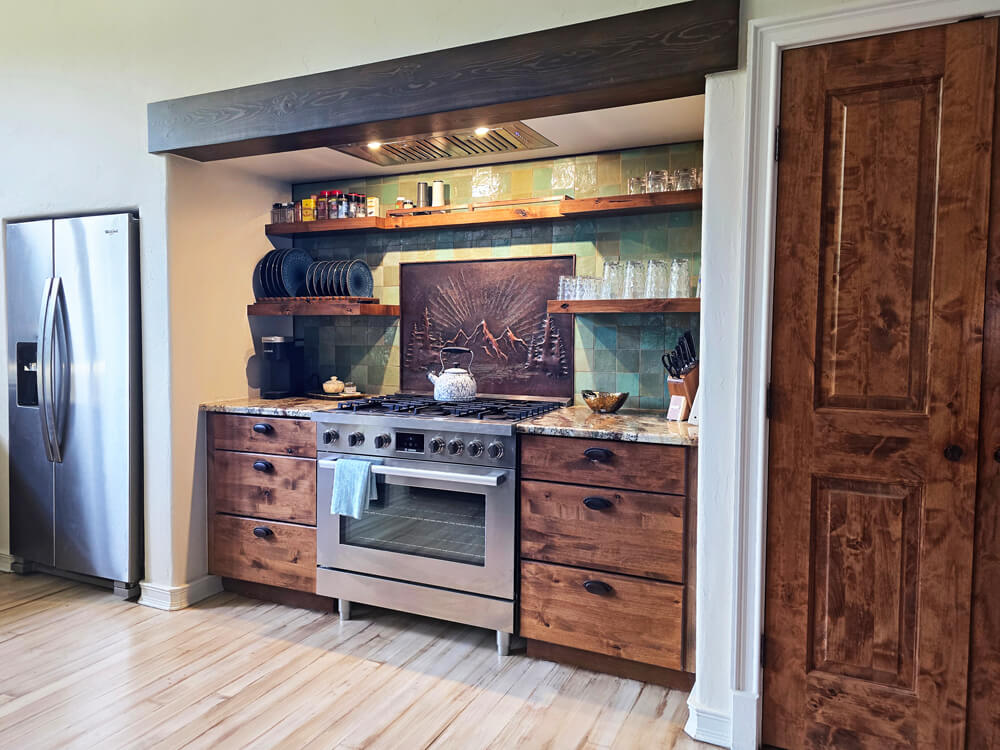
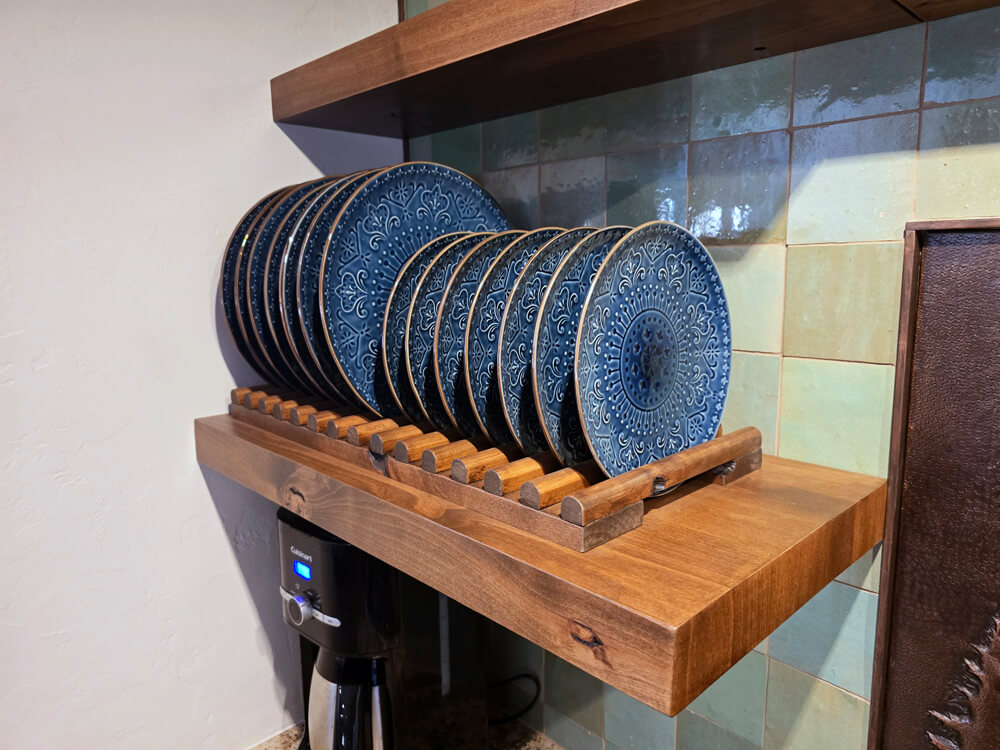
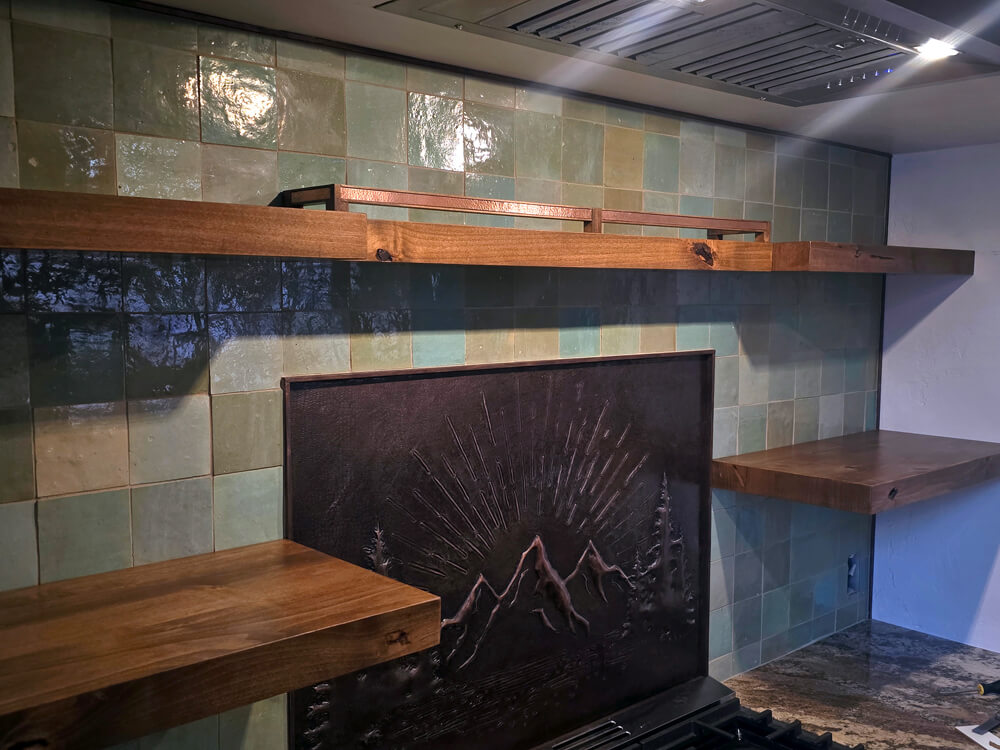
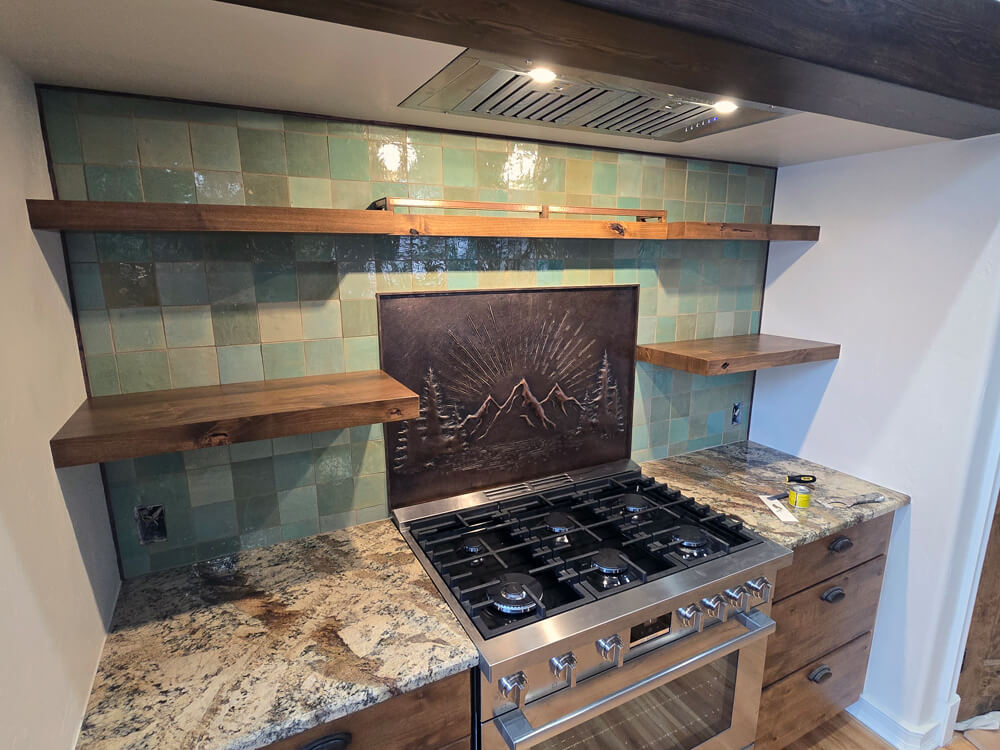
With new knotty alder floating shelves, custom plate racks, handmade Zellige tile, and an embellished hammered copper stove backsplash, this kitchen remodel vibrates with modern flair and elegance.
We started this project with design suggestions from an architect and then applied our own tweaks and details to better fit our client personally. Collaborating with other designers and creative minds is always a great opportunity, and when done well, it can benefit both the course of the build and the final product enormously.
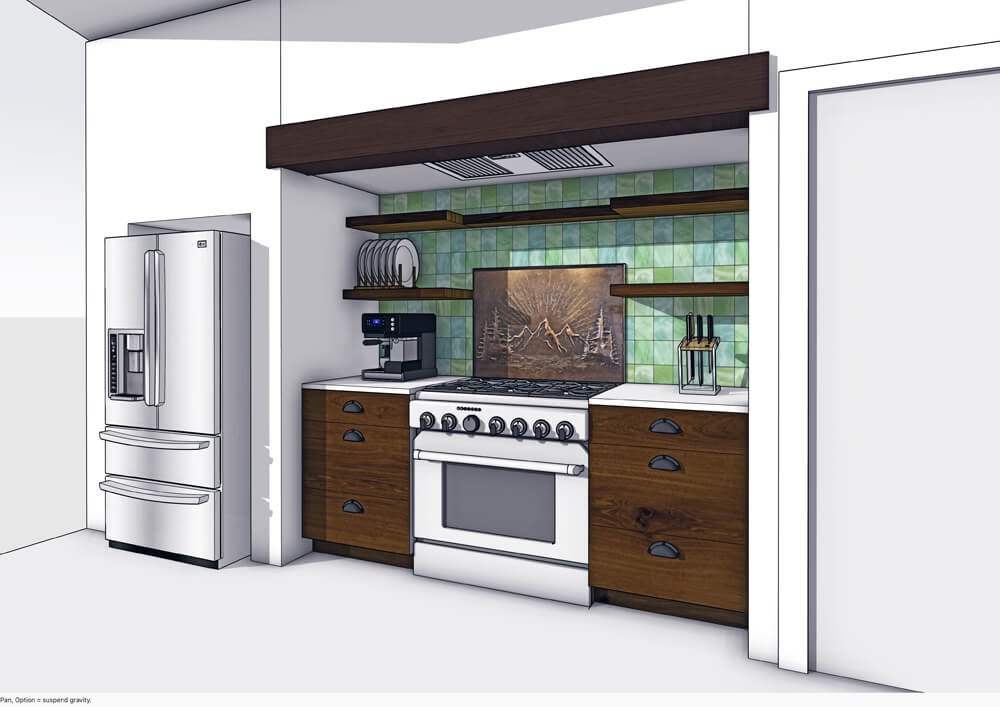
The home is a vacation residence in the San Juan Mountains, used primarily for family gatherings, ski vacations, and short-term visits. Because of this, the kitchen required less cabinet storage and a more open, usable layout. One of the first steps was creating a 3D rendering to share with the client, providing a more complete perspective and a real sense of how the finished project would look. This process was especially valuable since the clients live several states away and weren’t able to be on site to see progress in real time.
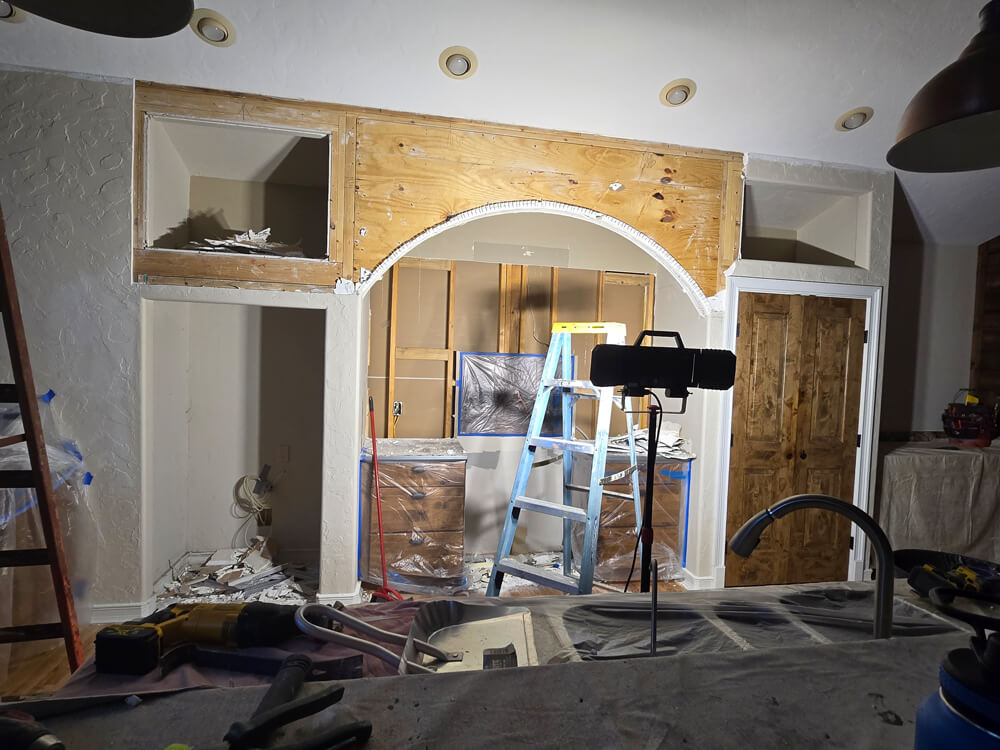
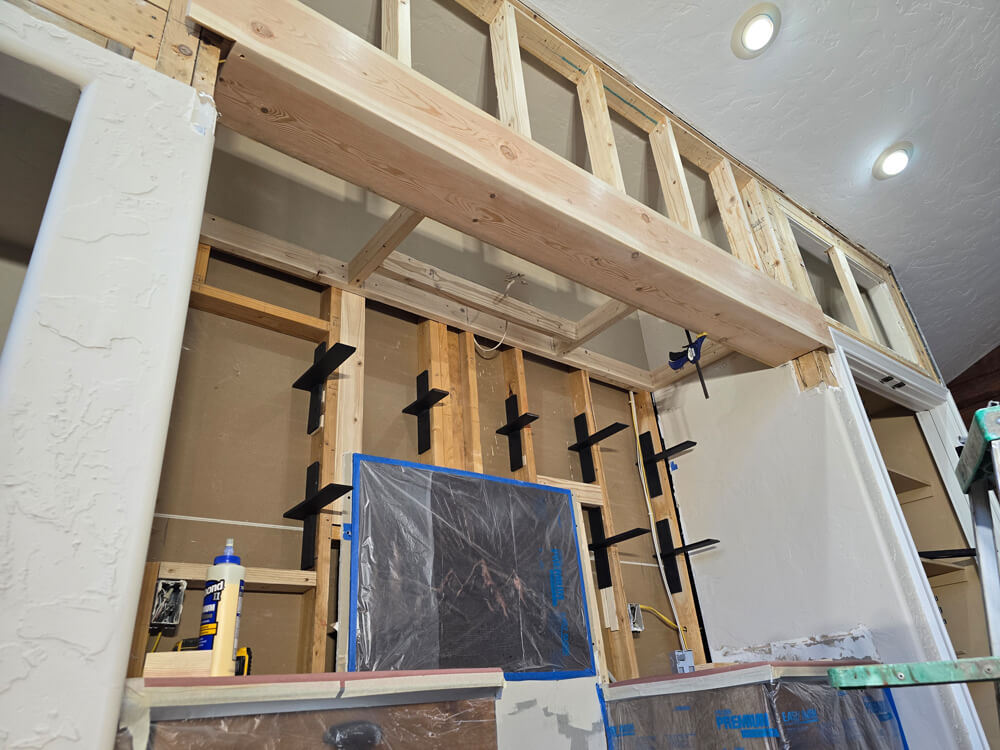
Demolition began with removing the existing cabinetry, tearing out the archway, and closing off overhead niches that had become nothing more than dust collectors. One of the main challenges was preserving the existing copper stove backsplash and integrating it into the new design. This required removing all surrounding drywall to add new framing and properly support heavy-duty floating shelf brackets designed to remain rigid without vibration or flex.
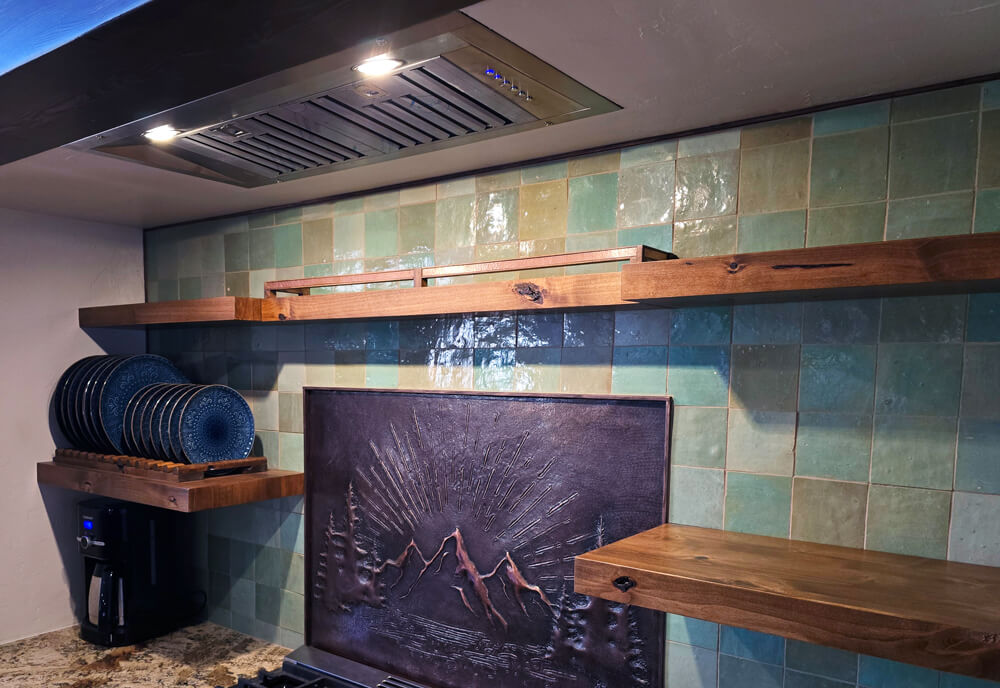
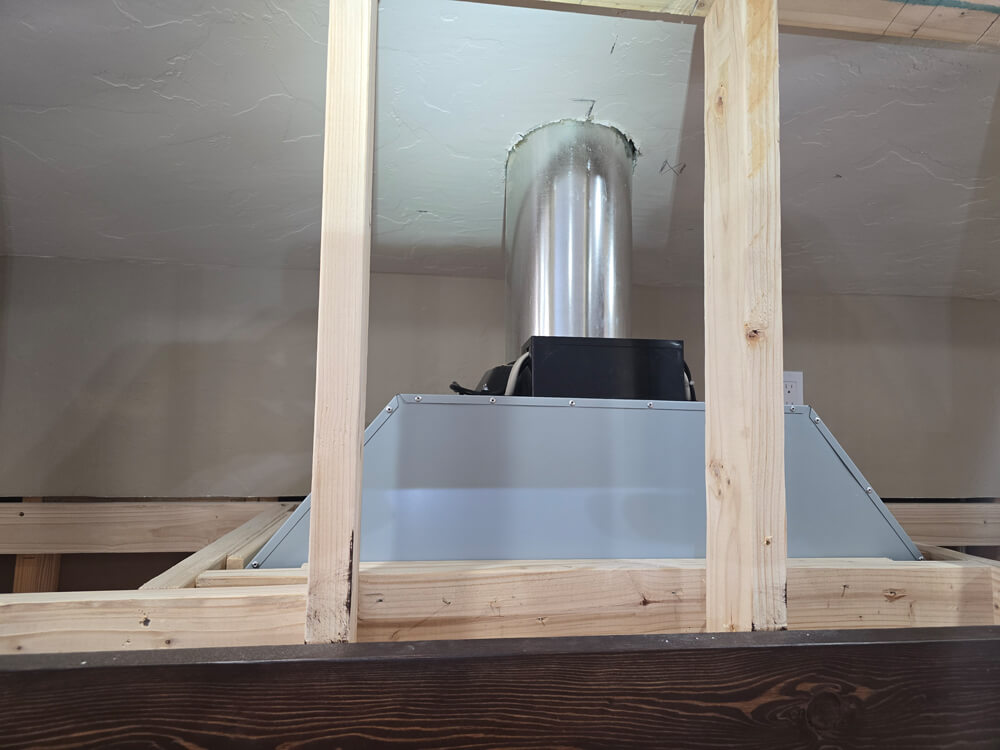
The clients requested a commercial 2400 CFM Proline hood vent that could be installed as discreetly as possible. This introduced additional challenges, including venting through a roof where several feet of snow accumulate each winter, requiring the vent cap to extend well above the snow load line. The control panel also needed to be within easy reach, which lowered the beam and ceiling height from the original design—changing the overall look and ultimately reducing the ideal vertical spacing for the floating shelves.
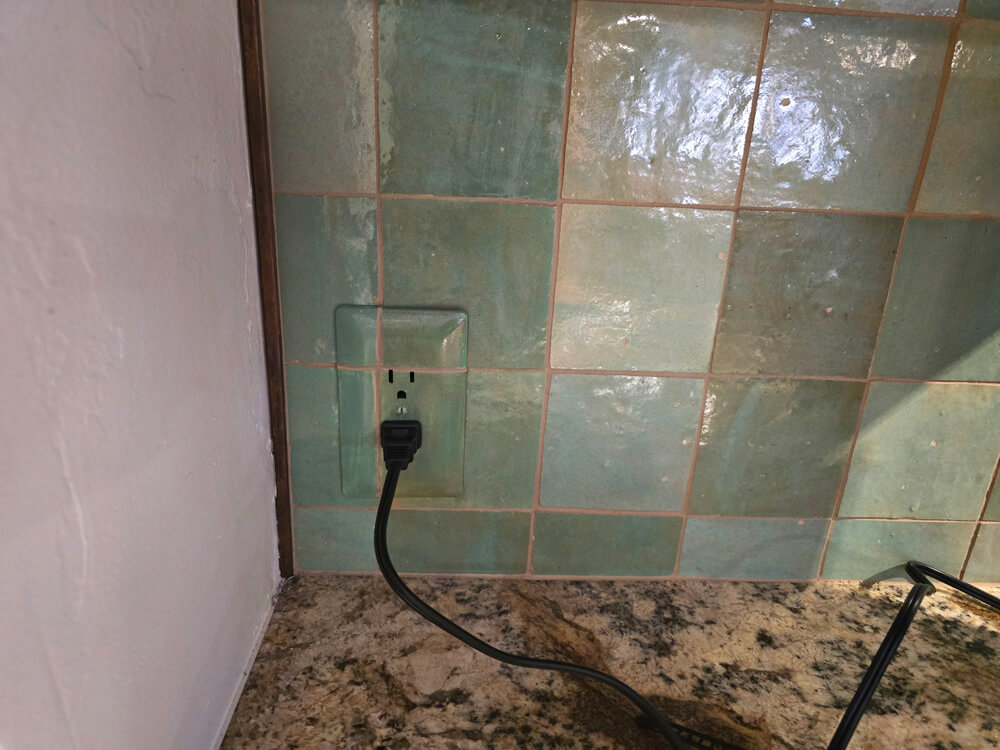
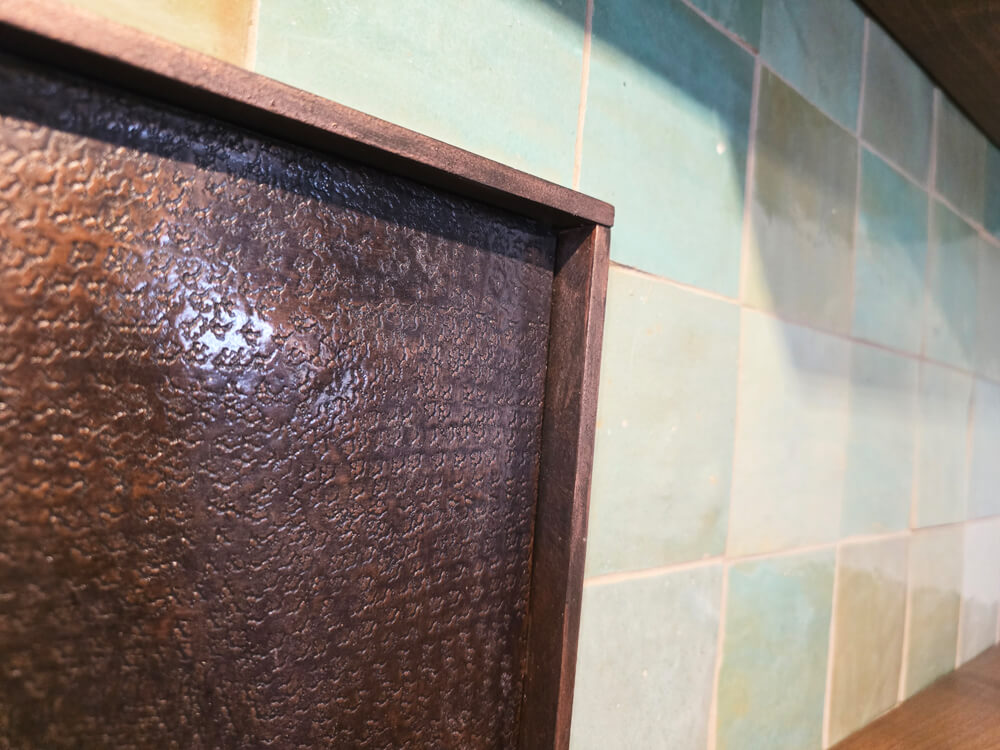
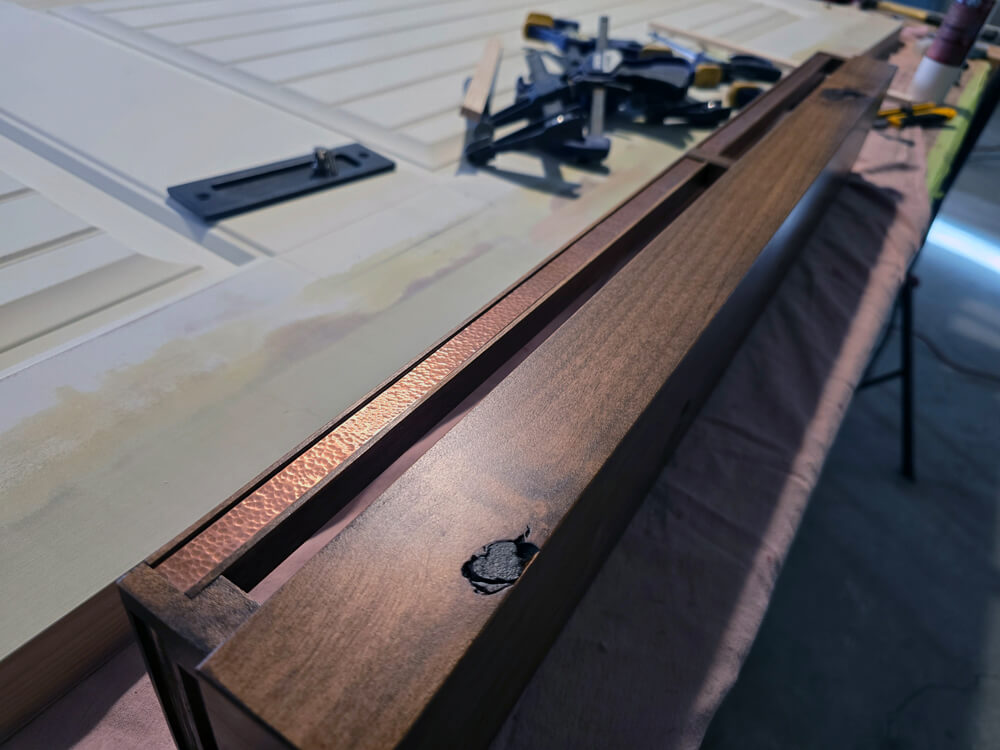
The shelves were built from knotty alder and stained to match the lower and existing cabinetry. Custom details include a plate rack and a hand-hammered copper accent on the center upper shelf rail. Because of the tile thickness, no standard aluminum Schluter trim was deep enough, so we created a custom faux copper-painted trim instead. This detail frames both the copper backsplash and the handmade Zellige tile.
Zellige tiles are individually handmade and cut with a specialized hammer, resulting in sharp, irregular edges and subtle variation from piece to piece. This requires an artistic eye for layout and grouting to achieve the right balance (thanks, Zack). The overhead beam was constructed using multiple smaller Douglas fir slabs to create a box beam, giving the appearance of a solid timber without the added cost of a single large piece.